 Image 1 of 1
Dentistry demands clinical precision, technical skill, and constant decision-making. Yet one of the most influential factors in patient care is often overlooked: how communication flows through the operatory.
In many practices, patient education, clinical handoffs, and treatment presentations occur in isolation rather than as a coordinated system. Even when providers communicate well individually, subtle misalignment can create hesitation, repetition, and unnecessary pressure during treatment discussions.
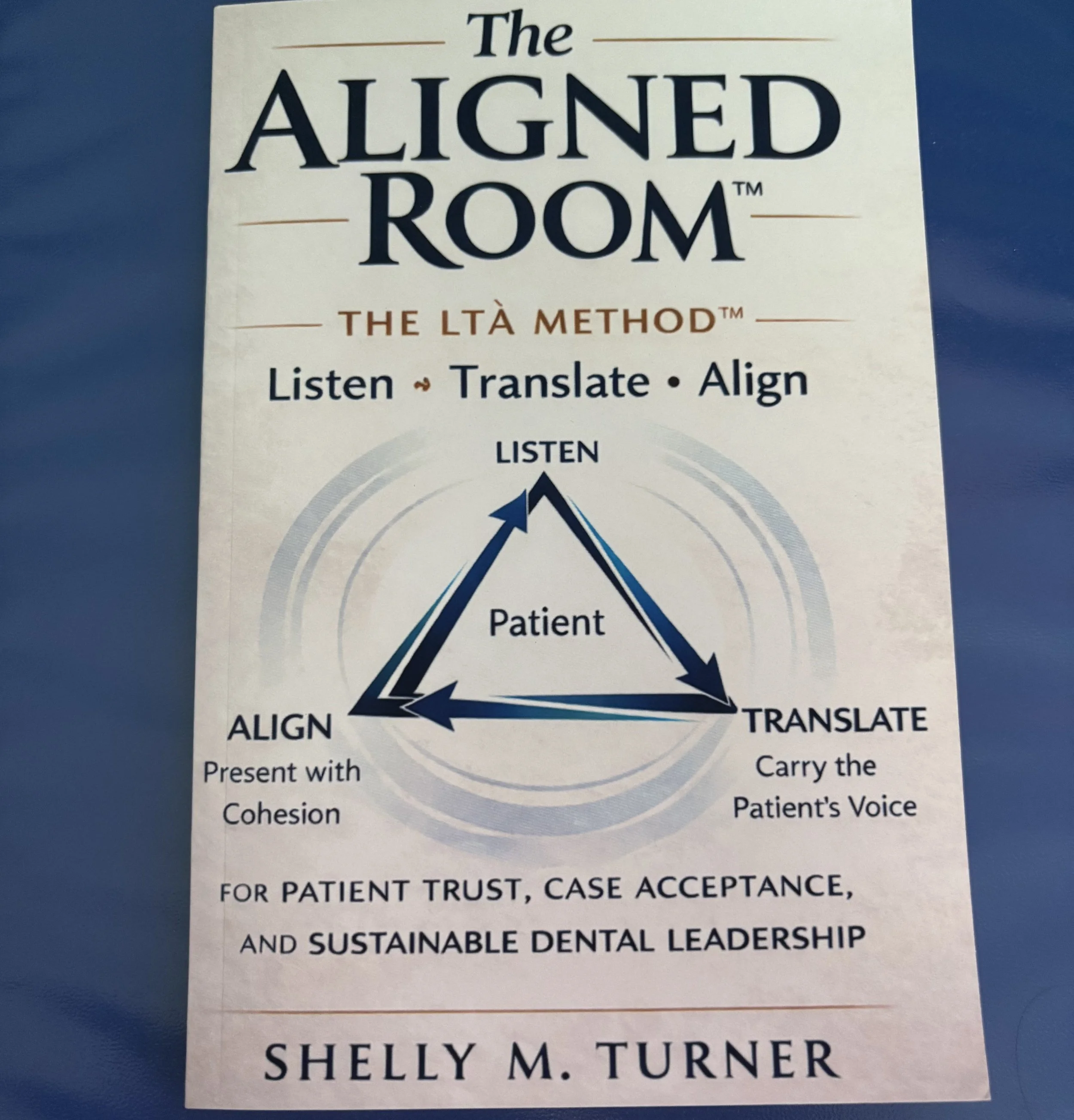
The Aligned Room™ introduces the LTA Method™ — Listen, Translate, Align, a practical communication framework designed to strengthen patient trust, support clear clinical handoffs, and improve treatment conversations without pressure.
By focusing on listening, representation, and team alignment, dental professionals can create steadier rooms where patients feel understood, clinicians communicate with cohesion, and decisions feel collaborative.
These are not soft skills.
They are structural behaviors that protect patient care, clinician capacity, and practice stability.
When rooms change, results follow.Frame your florals with sculptural, hand-thrown elegance.